Your Questions, Answered
Whether you are a parent seeking clarity, a young person wanting to understand yourself better, or a professional exploring how to work with us, this page is for you.
We know that navigating neurodiversity can feel overwhelming, especially when you are hearing different things from different places. These questions are drawn from real conversations with families, young people and professionals across Malaysia and the United Kingdom.
About The Neuro Pioneer Hub
What is The Neuro Pioneer Hub and who is it for?
The Neuro Pioneer Hub is a mission-driven initiative founded by a core team with lived experience of neurodiversity and decades of commercial leadership. We exist to break down barriers and open up meaningful pathways to leadership, entrepreneurship and high-impact careers for neurodivergent individuals, including those with autism, ADHD, dyslexia, dyspraxia, Tourette’s and other forms of neurodivergence.
We work with neurodivergent young people and adults, their families, educators, employers and organisations across Malaysia and the United Kingdom.
What is the Accelerator Programme and how does it work?
Our flagship Accelerator Programme is a first-of-its-kind 20-week structured journey designed specifically around different thinking styles, communication preferences and sensory needs. Participants move through four phases: self-discovery and confidence building (4 weeks), business development and digital skills (10 weeks), leadership training and industry internships (4 weeks), and investor pitching and real-world application (2 weeks).
Every participant receives individualised coaching, customised learning plans and a 2:1 mentor-to-participant ratio, with mentors trained in neurodiversity.
Who founded The Neuro Pioneer Hub and why?
The Hub was founded by Dr Bimal Roy Bhanu and Shakuntala Ratha Krishnan as a life legacy initiative. Dr Bimal is a former CEO whose AI technology venture was acquired by a listed company, with a PhD from Durham University and over 20 years in strategy, governance and AI systems. The wider team includes senior leaders Atar Singh and Kiren Kaur, together with mentors, coaches, occupational therapists and corporate partners.
This is not a programme designed from the outside looking in. It was built by people who understand the journey personally.
How can my organisation partner with The Neuro Pioneer Hub?
We welcome partnerships with organisations that share our belief in the strategic value of cognitive diversity. At a minimum, we ask corporate partners to offer structured internships and placements for programme graduates. Beyond that, partners can contribute coaching time, mental health support, showcase event sponsorship, knowledge-sharing and financial backing.
In return, partners gain access to uniquely skilled, creative and resilient professionals, alongside clear delivery under the Social pillar of ESG with measurable outcomes. Contact drbimalroy.bhanu@theneuropioneerhub.com to explore a partnership.
Does my child need a formal diagnosis to join the programme?
We understand that access to formal diagnosis varies enormously. In Malaysia, diagnostic infrastructure is still developing and many neurodivergent young people have never been formally assessed. We take a strengths-based, person-centred approach. If your child identifies as neurodivergent or shows clear indicators, we encourage you to contact us. We are interested in potential, not paperwork.
What age range does the programme serve?
The Accelerator Programme is designed primarily for neurodivergent young people and young adults who are ready to develop career and entrepreneurship skills. We work with individuals from late secondary school age through to early career stage. However, we recognise that neurodivergent journeys do not follow a single timeline, so we consider applications on an individual basis and welcome conversations about whether the programme is the right fit.
Is the programme available in both Malaysia and the UK?
The Neuro Pioneer Hub operates across both Malaysia and the United Kingdom. Our initial Accelerator Programme cohort is launching in Malaysia, with UK delivery planned as the programme scales. Our research, advocacy and family support work, including the white paper on intergenerational family dynamics and the Double Jeopardy Syndrome framework, draws on evidence and experience from both countries.
Understanding Neurodiversity
What does “neurodiversity” actually mean?
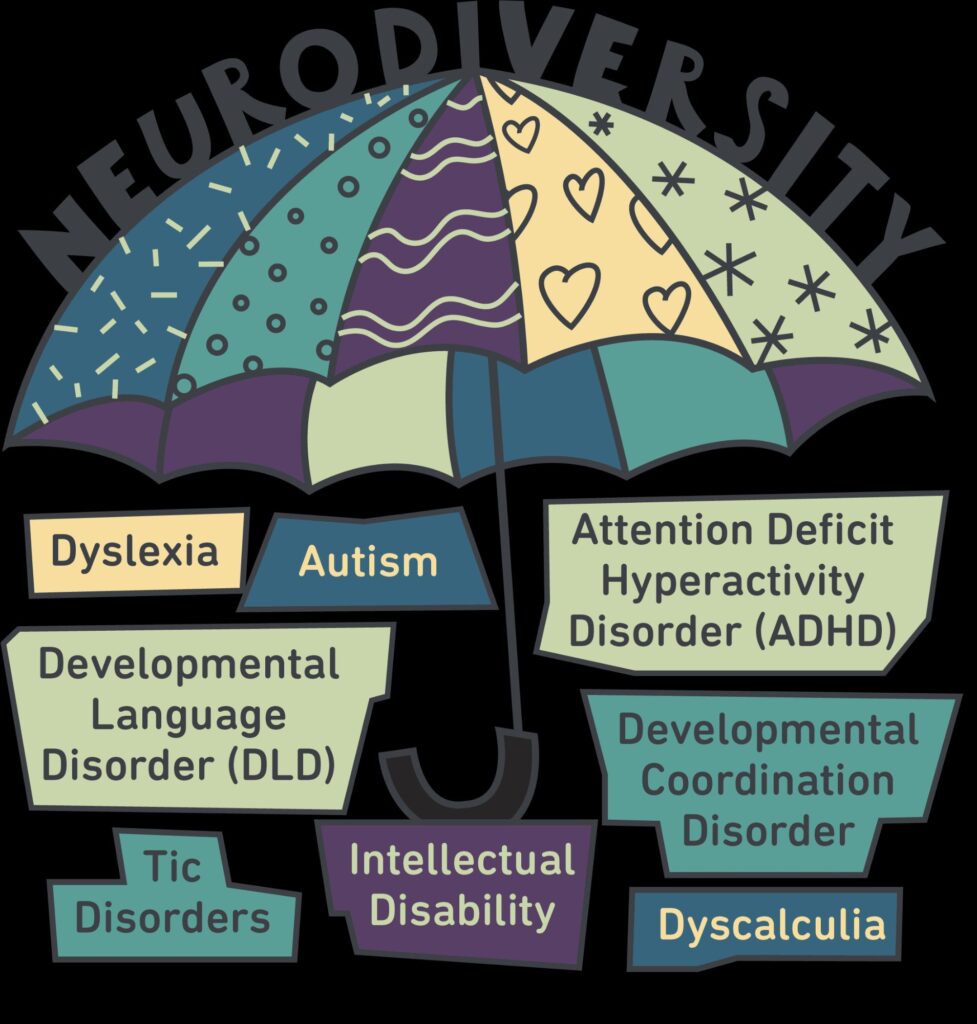
Neurodiversity is the idea that there is natural variation in how human brains work. Roughly 15 to 20 per cent of the global population are estimated to be neurodivergent. In Malaysia, government estimates suggest between 30 and 40 per cent of the population may be neurodiverse, representing over 10 million people.
Neurodivergence includes conditions such as autism, ADHD, dyslexia, dyspraxia, Tourette’s syndrome, dyscalculia and developmental language disorder. These are not diseases. They are part of the natural spectrum of human cognitive variation.
What is the difference between autism, ADHD, dyslexia and dyspraxia?
Each condition reflects a different pattern of how the brain processes information. Many people experience more than one condition simultaneously (co-occurrence).
Autism shapes how a person communicates, experiences sensory input and navigates social interactions. It often brings precision, deep focus and systematic thinking. ADHD affects attention regulation, impulse control and energy levels, often bringing creativity, adaptability and rapid idea generation. Dyslexia affects how the brain processes written language, often bringing strong visual thinking, storytelling ability and big-picture reasoning. Dyspraxia affects motor coordination and planning, often coexisting with strong verbal reasoning, empathy and strategic thinking.
Other forms include Tourette’s syndrome (involuntary tics), dyscalculia (numerical processing) and developmental language disorder.
Can neurodivergence be “cured” or “grown out of”?
No. Neurodivergence is not a disease and it does not require curing. It is a fundamental aspect of how a person’s brain is wired, and it remains throughout life. What changes over time is a person’s understanding of their own mind, the strategies they develop, and the extent to which their environment supports them.
Sensationalised headlines claiming to identify “the cause” of autism are consistently unsupported by robust evidence. They burden families with needless guilt and fuel the dangerous fiction that neurodivergence is something to fear.
What is “masking” and why does it matter?
Masking (or social camouflaging) is when a neurodivergent person modifies their natural behaviour to meet others’ expectations. This might include suppressing stimming, rehearsing social scripts, forcing eye contact, or mimicking neurotypical conversation patterns.
Research consistently links sustained masking with increased anxiety, depression and emotional exhaustion. Critically, masking often begins at home, when a child senses that parts of themselves are unwelcome. Creating safe environments where people can be themselves is one of the most important things families and employers can do.
What is “sensory overload” and how can it be managed?
Sensory overload occurs when the brain receives more sensory input than it can comfortably process. This might be triggered by bright lights, loud sounds, crowded spaces, certain textures, or strong smells. Symptoms include feeling anxious, irritable, physically drained, or needing to escape the situation urgently.
Management strategies include: carrying a personal sensory toolkit (noise-cancelling headphones, sunglasses, fidget tools), scheduling regular sensory breaks during busy days, creating a calm retreat space at home, planning ahead for challenging environments, and learning to recognise your early warning signs before overload peaks.
What is “executive function” and why do neurodivergent people struggle with it?
Executive functions are the brain’s management system: the cognitive processes that help you plan, organise, remember instructions, manage time, switch between tasks and regulate emotions. Think of them as the brain’s air traffic control system.
Many neurodivergent people, particularly those with ADHD and autism, experience executive function challenges. This is not about intelligence or effort. It is about neurological wiring. Difficulties might include starting tasks (even ones you want to do), estimating how long things take (“time blindness”), keeping track of belongings, switching between activities, or organising thoughts under pressure.
Practical strategies include: using visual schedules and checklists, breaking large tasks into small steps, using apps like Trello or GoblinTools to externalise planning, setting timers to make time visible, and building routines that reduce the number of decisions needed each day.
What is “autistic burnout” and how is it different from regular tiredness?
Autistic burnout is a state of chronic physical, emotional and mental exhaustion that results from the cumulative effect of navigating a world not designed for autistic minds. It is not the same as everyday tiredness or workplace stress. It can last weeks, months, or longer and may involve a noticeable regression in skills that were previously manageable.
Signs include: losing the ability to perform tasks that were once routine, increased sensitivity to sensory input, withdrawal from social contact, difficulty with speech or communication, and a profound sense of exhaustion that sleep does not resolve. Recovery requires reduced demands, sensory rest, acceptance from those around you, and time. If you suspect you or your child is experiencing burnout, reducing masking and creating a genuinely safe environment is the most important first step.
Is it possible to be both autistic and have ADHD?
Yes, and it is actually quite common. The combination is sometimes referred to as “AuDHD.” Research suggests that a significant proportion of autistic individuals also meet the criteria for ADHD, and vice versa. The two conditions can interact in complex ways: autism’s preference for routine may conflict with ADHD’s need for novelty, creating an internal tug-of-war that can be exhausting.
Understanding both conditions as they apply to you individually is important, because strategies that help with one may not always help with the other. Personalised support that takes both profiles into account is essential.

For Families

My child has just been diagnosed. I feel overwhelmed. Where do I start?
First, take a breath. What you are feeling is completely normal. Many parents describe a confusing mix of relief, grief, guilt and fear. None of these feelings make you a bad parent. They make you a human one.
Your child is the same person they were before the diagnosis. The diagnosis has given you a lens to understand them more fully.
When you are ready: learn from affirming, strengths-based sources. Talk to your child openly. Seek out a community of other parents who understand.
My spouse and I disagree about the diagnosis. How do we handle this?
Disagreement is one of the most common dynamics we see. Research through The Neuro Pioneer Hub has identified “Double Jeopardy Syndrome”: neurodivergent young people experience compounded identity pressure when navigating both societal misunderstanding and conflicting family narratives.
When one parent embraces the diagnosis and the other resists, the child may feel they must become a different person depending on which parent is in the room. The goal is not perfect agreement overnight, but an ongoing honest conversation where both parents move in the same direction.
How do I explain the diagnosis to grandparents who do not understand?
Use “bridging language”: frame the diagnosis in terms that connect with existing values rather than asking them to abandon their worldview. For example: “You are right that hard work matters. What we are learning is that his brain processes information differently, and the hard work you value needs to be directed in a way that works with how his mind actually functions.”
Be patient. A grandmother who adores her grandchild can simultaneously struggle to accept the diagnosis. That combination of love and confusion is not hostility. It is the beginning of a conversation.
I worry about telling others. Will the diagnosis follow my child forever?
Concealment carries its own cost. When a diagnosis is hidden, the child absorbs a powerful unspoken message: there is something about me that cannot be spoken aloud. Over time, this leads to internalised shame and increased masking.
Disclosure is not all or nothing. You can be selective. But the people closest to your child will be better equipped to support them when they understand what they are seeing. A diagnosis does not define your child’s future. What defines it is whether they grow up understood and supported.
How do I support my child’s siblings who do not have a diagnosis?
Siblings of neurodivergent children can experience a range of feelings: pride, protectiveness, confusion, jealousy over perceived differences in parental attention, and sometimes guilt about their own frustrations. All of these feelings are legitimate and need space to be expressed.
Talk openly with siblings in age-appropriate language about what neurodivergence means. Acknowledge that their feelings matter too. Create dedicated one-on-one time with each child. Help siblings understand that different children need different things, and that different is not the same as unfair. Consider connecting them with sibling support groups where they can talk to others in similar situations.
What should I look for in a school for my neurodivergent child?
Look for schools that demonstrate genuine understanding of neurodiversity rather than simply claiming to be “inclusive.” Key indicators include: staff trained in neurodivergent learning profiles, willingness to make reasonable adjustments (such as flexible seating, sensory breaks, modified assessment formats), a strengths-based approach rather than a deficit model, clear communication with parents about how the child is being supported, and a culture where difference is normalised rather than singled out.
In Malaysia, the education system operates a zero-reject policy for inclusive education, but implementation varies significantly between schools. Ask specific questions about how the school supports neurodivergent learners in practice, not just in policy.
How do I manage meltdowns in public without feeling judged?
First, it is important to understand that a meltdown is not a tantrum. A meltdown is an involuntary response to overwhelming sensory, emotional or cognitive input. The child is not choosing to behave this way. They are in genuine distress.
Practical strategies: have an exit plan before entering challenging environments. Carry a sensory toolkit (headphones, fidget tool, comfort item). Move to the quietest available space. Reduce all demands immediately. Speak in short, calm, low-volume phrases. Do not try to reason or explain during the meltdown; wait until the child has regulated. Afterwards, reflect together on what the triggers may have been.
As for feeling judged: the opinions of strangers who do not understand your child’s neurology are not more important than your child’s wellbeing. You are doing exactly what your child needs.
For Young People
I have just found out I am neurodivergent. What does this mean for me?
It means your brain works in its own distinctive way, and that is not a problem. Many things you have always noticed about yourself now have an explanation, and that explanation is not “something is wrong with you.” It is “your mind works differently, and that is both valid and valuable.”
You are far from alone. An estimated 15 to 20 per cent of the global population is neurodivergent. Your mind is not a disadvantage. It is an asset that the right environment can unlock.
I feel like I have to pretend to be someone else to fit in. Is that normal?
What you are describing is masking, and it is extraordinarily common. The effort of constantly monitoring your behaviour is genuinely exhausting. You did not choose to start masking; most people begin in childhood.
When one parent embraces the diagnosis and the other resists, the child may feel they must become a different person depending on which parent is in the room. The goal is not perfect agreement overnight, but an ongoing honest conversation where both parents move in the same direction.
Can neurodivergent people have successful careers?
Absolutely. Neurodivergent individuals succeed at every level across technology, finance, design, creative industries, leadership and entrepreneurship. Research shows 45 per cent of C-level executives and 55 per cent of business owners self-identify as neurodivergent. Organisations including SAP, Microsoft, EY, JPMorgan and PETRONAS have established neurodiversity hiring programmes.
The barrier has never been talent. It has been environments that fail to recognise it.
How do I talk to my friends about being neurodivergent?
Disclosure to friends is entirely your choice. There is no obligation and no timeline. If you do choose to share, you might start with the friends you trust most and keep it simple: explain what your neurodivergence means for you personally, rather than giving a clinical textbook definition.
You might say something like: “My brain processes things a bit differently, which means I sometimes need a quieter environment” or “I have ADHD, which is why I sometimes lose track of time or change topics quickly. It is just how my mind works.”
The right friends will respond with curiosity and support. If someone responds badly, that tells you something about them, not about you.
I struggle with time management and staying organised. Any practical tips?
Executive function challenges are very real and they are not about being lazy or careless. Here are strategies that many neurodivergent people find helpful:
Use a visual timer (like the Time Timer app) so you can see time passing. Break every task into the smallest possible steps and write them down. Try body doubling: working alongside someone else (even virtually) to help with task initiation. Use the “two-minute rule”: if something takes less than two minutes, do it now. Build routines around anchors (things you already do consistently). Batch similar tasks together. And be kind to yourself on the days when none of this works. Tomorrow is a fresh start.
Workplace and Careers
Should I disclose my neurodivergence to my employer?
This is a deeply personal decision. Disclosure can open the door to workplace adjustments and a more authentic working life. Assess your workplace culture first: does the organisation have a neurodiversity policy? Has leadership spoken positively about cognitive diversity?
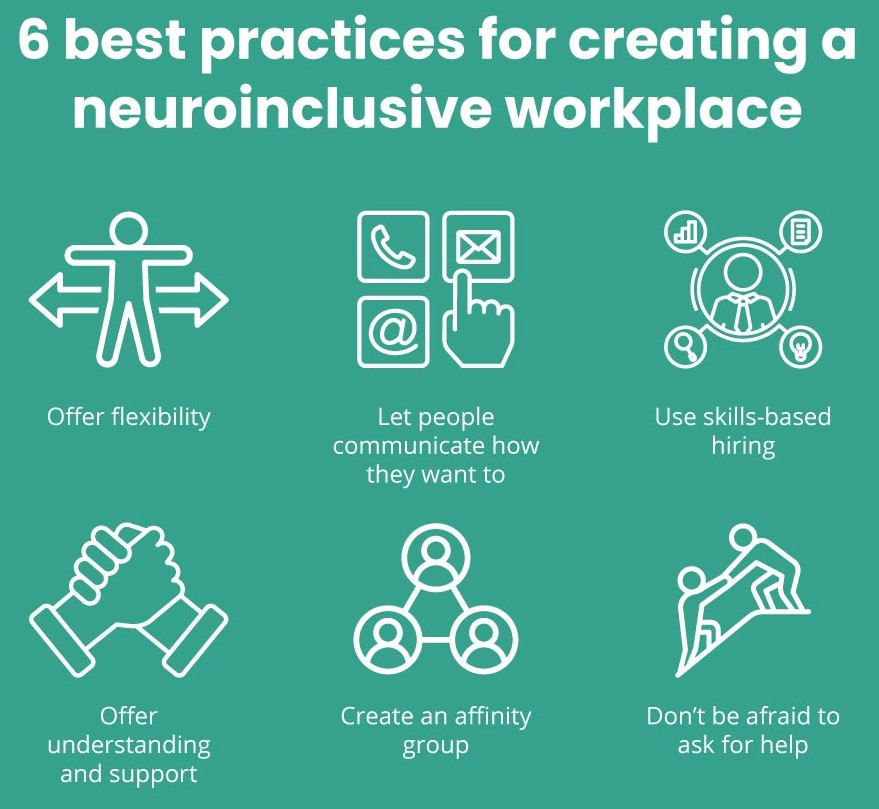
You might share only with your direct manager or HR. Adjustments need not be complex: flexible scheduling, a quieter workspace, written instructions, or structured feedback can make a significant difference.
What workplace adjustments can I ask for?
Common adjustments that support neurodivergent employees include: receiving meeting agendas in advance, having written rather than purely verbal instructions, flexible start and finish times, access to a quiet workspace or room for sensory breaks, noise-cancelling headphones at your desk, permission to use fidget tools, task management software, regular structured check-ins rather than ad-hoc feedback, and extra processing time for complex decisions.
Many of these adjustments benefit all employees, not just neurodivergent ones. A good employer will recognise this and view adjustments as productivity tools, not special treatment.
Why should businesses invest in neurodiversity?
Because it is good strategy. Cognitively diverse teams outperform homogeneous ones in innovation and problem-solving. Organisations embracing neurodiverse hiring report retention rates exceeding 90 per cent. From an ESG perspective, championing neurodiversity delivers measurable outcomes under the Social pillar.
In Malaysia, this aligns with MYDigital, the Twelfth Malaysia Plan and the Shared Prosperity Vision 2030. Companies including PETRONAS, Maybank, RHB Bank, Gamuda, EY and Deloitte have begun incorporating neurodiversity into their inclusion strategies. This is not charity. It is nation-building.
I have been discriminated against at work because of my neurodivergence. What can I do?
First, know that you have rights. In the UK, neurodivergent conditions are generally protected under the Equality Act 2010. In Malaysia, the Persons with Disabilities Act 2008 provides protections, though enforcement and awareness vary.
Practical steps: document specific incidents with dates and details. Seek advice from your HR department or a trusted manager. Contact an organisation that specialises in employment rights for disabled or neurodivergent people. In the UK, ACAS provides free workplace dispute resolution. In Malaysia, the Labour Department can advise on rights.
Discrimination is never acceptable and is never your fault.
Diagnosis and Assessment
How do I get a diagnosis in Malaysia?
In Malaysia, neurodevelopmental assessments can be accessed through government hospitals (particularly their psychiatry or developmental paediatrics departments), private clinical psychologists, and private psychiatrists. Waiting times and costs vary significantly. Government assessments may be more affordable but involve longer waits; private assessments are faster but more expensive.
Organisations that can help guide you include MAHFAA (Malaysian High Functioning Autism Association), Enabling Academy (operated by Gamuda), United Voice, and Oasis Place. If formal diagnosis is not immediately accessible, remember that many forms of support and self-understanding do not require a clinical label.
How do I get a diagnosis in the UK?
In the UK, you can request an assessment through your GP, who will refer you to specialist NHS services. Waiting times for NHS autism and ADHD assessments currently exceed 12 months in many areas and can stretch beyond two years in some regions. Private assessments are available through registered clinical psychologists and psychiatrists, typically costing between £500 and £2,500 depending on the complexity.
A growing number of organisations offer “right to choose” pathways under NHS regulations, allowing you to be assessed by an approved private provider at NHS cost. Ask your GP about this option. Organisations such as Autistica and the ADHD Foundation can provide guidance on navigating the system.
Can adults be diagnosed with neurodivergent conditions?
Yes, and in fact, late diagnosis in adulthood is increasingly common, particularly for women, people from minority ethnic backgrounds, and those whose neurodivergence was masked or misinterpreted during childhood. Many adults describe finally receiving a diagnosis in their 20s, 30s, 40s or beyond as profoundly validating.
The assessment process for adults typically involves a detailed developmental history, questionnaires, and a clinical interview. It can be helpful to bring someone who knew you as a child (such as a parent) to provide early history, though this is not always essential.
About The Neuro Pioneer Hub
What is The Neuro Pioneer Hub and who is it for?
The Neuro Pioneer Hub is a mission-driven initiative founded by a core team with lived experience of neurodiversity and decades of commercial leadership. We exist to break down barriers and open up meaningful pathways to leadership, entrepreneurship and high-impact careers for neurodivergent individuals, including those with autism, ADHD, dyslexia, dyspraxia, Tourette’s and other forms of neurodivergence.
We work with neurodivergent young people and adults, their families, educators, employers and organisations across Malaysia and the United Kingdom.
What is the Accelerator Programme and how does it work?
Our flagship Accelerator Programme is a first-of-its-kind 20-week structured journey designed specifically around different thinking styles, communication preferences and sensory needs. Participants move through four phases: self-discovery and confidence building (4 weeks), business development and digital skills (10 weeks), leadership training and industry internships (4 weeks), and investor pitching and real-world application (2 weeks).
Every participant receives individualised coaching, customised learning plans and a 2:1 mentor-to-participant ratio, with mentors trained in neurodiversity.
Who founded The Neuro Pioneer Hub and why?
The Hub was founded by Dr Bimal Roy Bhanu and Shakuntala Ratha Krishnan as a life legacy initiative. Dr Bimal is a former CEO whose AI technology venture was acquired by a listed company, with a PhD from Durham University and over 20 years in strategy, governance and AI systems. The wider team includes senior leaders Atar Singh and Kiren Kaur, together with mentors, coaches, occupational therapists and corporate partners.
This is not a programme designed from the outside looking in. It was built by people who understand the journey personally.
How can my organisation partner with The Neuro Pioneer Hub?
We welcome partnerships with organisations that share our belief in the strategic value of cognitive diversity. At a minimum, we ask corporate partners to offer structured internships and placements for programme graduates. Beyond that, partners can contribute coaching time, mental health support, showcase event sponsorship, knowledge-sharing and financial backing.
In return, partners gain access to uniquely skilled, creative and resilient professionals, alongside clear delivery under the Social pillar of ESG with measurable outcomes. Contact drbimalroy.bhanu@theneuropioneerhub.com to explore a partnership.
Does my child need a formal diagnosis to join the programme?
We understand that access to formal diagnosis varies enormously. In Malaysia, diagnostic infrastructure is still developing and many neurodivergent young people have never been formally assessed. We take a strengths-based, person-centred approach. If your child identifies as neurodivergent or shows clear indicators, we encourage you to contact us. We are interested in potential, not paperwork.
What age range does the programme serve?
The Accelerator Programme is designed primarily for neurodivergent young people and young adults who are ready to develop career and entrepreneurship skills. We work with individuals from late secondary school age through to early career stage. However, we recognise that neurodivergent journeys do not follow a single timeline, so we consider applications on an individual basis and welcome conversations about whether the programme is the right fit.
Is the programme available in both Malaysia and the UK?
The Neuro Pioneer Hub operates across both Malaysia and the United Kingdom. Our initial Accelerator Programme cohort is launching in Malaysia, with UK delivery planned as the programme scales. Our research, advocacy and family support work, including the white paper on intergenerational family dynamics and the Double Jeopardy Syndrome framework, draws on evidence and experience from both countries.
Understanding Neurodiversity
What does “neurodiversity” actually mean?
Neurodiversity is the idea that there is natural variation in how human brains work. Roughly 15 to 20 per cent of the global population are estimated to be neurodivergent. In Malaysia, government estimates suggest between 30 and 40 per cent of the population may be neurodiverse, representing over 10 million people.
Neurodivergence includes conditions such as autism, ADHD, dyslexia, dyspraxia, Tourette’s syndrome, dyscalculia and developmental language disorder. These are not diseases. They are part of the natural spectrum of human cognitive variation.
What is the difference between autism, ADHD, dyslexia and dyspraxia?
Each condition reflects a different pattern of how the brain processes information. Many people experience more than one condition simultaneously (co-occurrence).
Autism shapes how a person communicates, experiences sensory input and navigates social interactions. It often brings precision, deep focus and systematic thinking. ADHD affects attention regulation, impulse control and energy levels, often bringing creativity, adaptability and rapid idea generation. Dyslexia affects how the brain processes written language, often bringing strong visual thinking, storytelling ability and big-picture reasoning. Dyspraxia affects motor coordination and planning, often coexisting with strong verbal reasoning, empathy and strategic thinking.
Other forms include Tourette’s syndrome (involuntary tics), dyscalculia (numerical processing) and developmental language disorder.
Can neurodivergence be “cured” or “grown out of”?
No. Neurodivergence is not a disease and it does not require curing. It is a fundamental aspect of how a person’s brain is wired, and it remains throughout life. What changes over time is a person’s understanding of their own mind, the strategies they develop, and the extent to which their environment supports them.
Sensationalised headlines claiming to identify “the cause” of autism are consistently unsupported by robust evidence. They burden families with needless guilt and fuel the dangerous fiction that neurodivergence is something to fear.
What is “masking” and why does it matter?
Masking (or social camouflaging) is when a neurodivergent person modifies their natural behaviour to meet others’ expectations. This might include suppressing stimming, rehearsing social scripts, forcing eye contact, or mimicking neurotypical conversation patterns.
Research consistently links sustained masking with increased anxiety, depression and emotional exhaustion. Critically, masking often begins at home, when a child senses that parts of themselves are unwelcome. Creating safe environments where people can be themselves is one of the most important things families and employers can do.
What is “sensory overload” and how can it be managed?
Sensory overload occurs when the brain receives more sensory input than it can comfortably process. This might be triggered by bright lights, loud sounds, crowded spaces, certain textures, or strong smells. Symptoms include feeling anxious, irritable, physically drained, or needing to escape the situation urgently.
Management strategies include: carrying a personal sensory toolkit (noise-cancelling headphones, sunglasses, fidget tools), scheduling regular sensory breaks during busy days, creating a calm retreat space at home, planning ahead for challenging environments, and learning to recognise your early warning signs before overload peaks.
What is “executive function” and why do neurodivergent people struggle with it?
Executive functions are the brain’s management system: the cognitive processes that help you plan, organise, remember instructions, manage time, switch between tasks and regulate emotions. Think of them as the brain’s air traffic control system.
Many neurodivergent people, particularly those with ADHD and autism, experience executive function challenges. This is not about intelligence or effort. It is about neurological wiring. Difficulties might include starting tasks (even ones you want to do), estimating how long things take (“time blindness”), keeping track of belongings, switching between activities, or organising thoughts under pressure.
Practical strategies include: using visual schedules and checklists, breaking large tasks into small steps, using apps like Trello or GoblinTools to externalise planning, setting timers to make time visible, and building routines that reduce the number of decisions needed each day.
What is “autistic burnout” and how is it different from regular tiredness?
Autistic burnout is a state of chronic physical, emotional and mental exhaustion that results from the cumulative effect of navigating a world not designed for autistic minds. It is not the same as everyday tiredness or workplace stress. It can last weeks, months, or longer and may involve a noticeable regression in skills that were previously manageable.
Signs include: losing the ability to perform tasks that were once routine, increased sensitivity to sensory input, withdrawal from social contact, difficulty with speech or communication, and a profound sense of exhaustion that sleep does not resolve. Recovery requires reduced demands, sensory rest, acceptance from those around you, and time. If you suspect you or your child is experiencing burnout, reducing masking and creating a genuinely safe environment is the most important first step.
Is it possible to be both autistic and have ADHD?
Yes, and it is actually quite common. The combination is sometimes referred to as “AuDHD.” Research suggests that a significant proportion of autistic individuals also meet the criteria for ADHD, and vice versa. The two conditions can interact in complex ways: autism’s preference for routine may conflict with ADHD’s need for novelty, creating an internal tug-of-war that can be exhausting.
Understanding both conditions as they apply to you individually is important, because strategies that help with one may not always help with the other. Personalised support that takes both profiles into account is essential.
For Families
My child has just been diagnosed. I feel overwhelmed. Where do I start?
First, take a breath. What you are feeling is completely normal. Many parents describe a confusing mix of relief, grief, guilt and fear. None of these feelings make you a bad parent. They make you a human one.
Your child is the same person they were before the diagnosis. The diagnosis has given you a lens to understand them more fully.
When you are ready: learn from affirming, strengths-based sources. Talk to your child openly. Seek out a community of other parents who understand.
My spouse and I disagree about the diagnosis. How do we handle this?
Disagreement is one of the most common dynamics we see. Research through The Neuro Pioneer Hub has identified “Double Jeopardy Syndrome”: neurodivergent young people experience compounded identity pressure when navigating both societal misunderstanding and conflicting family narratives.
When one parent embraces the diagnosis and the other resists, the child may feel they must become a different person depending on which parent is in the room. The goal is not perfect agreement overnight, but an ongoing honest conversation where both parents move in the same direction.
How do I explain the diagnosis to grandparents who do not understand?
Use “bridging language”: frame the diagnosis in terms that connect with existing values rather than asking them to abandon their worldview. For example: “You are right that hard work matters. What we are learning is that his brain processes information differently, and the hard work you value needs to be directed in a way that works with how his mind actually functions.”
Be patient. A grandmother who adores her grandchild can simultaneously struggle to accept the diagnosis. That combination of love and confusion is not hostility. It is the beginning of a conversation.
I worry about telling others. Will the diagnosis follow my child forever?
Concealment carries its own cost. When a diagnosis is hidden, the child absorbs a powerful unspoken message: there is something about me that cannot be spoken aloud. Over time, this leads to internalised shame and increased masking.
Disclosure is not all or nothing. You can be selective. But the people closest to your child will be better equipped to support them when they understand what they are seeing. A diagnosis does not define your child’s future. What defines it is whether they grow up understood and supported.
How do I support my child’s siblings who do not have a diagnosis?
Siblings of neurodivergent children can experience a range of feelings: pride, protectiveness, confusion, jealousy over perceived differences in parental attention, and sometimes guilt about their own frustrations. All of these feelings are legitimate and need space to be expressed.
Talk openly with siblings in age-appropriate language about what neurodivergence means. Acknowledge that their feelings matter too. Create dedicated one-on-one time with each child. Help siblings understand that different children need different things, and that different is not the same as unfair. Consider connecting them with sibling support groups where they can talk to others in similar situations.
What should I look for in a school for my neurodivergent child?
Look for schools that demonstrate genuine understanding of neurodiversity rather than simply claiming to be “inclusive.” Key indicators include: staff trained in neurodivergent learning profiles, willingness to make reasonable adjustments (such as flexible seating, sensory breaks, modified assessment formats), a strengths-based approach rather than a deficit model, clear communication with parents about how the child is being supported, and a culture where difference is normalised rather than singled out.
In Malaysia, the education system operates a zero-reject policy for inclusive education, but implementation varies significantly between schools. Ask specific questions about how the school supports neurodivergent learners in practice, not just in policy.
How do I manage meltdowns in public without feeling judged?
First, it is important to understand that a meltdown is not a tantrum. A meltdown is an involuntary response to overwhelming sensory, emotional or cognitive input. The child is not choosing to behave this way. They are in genuine distress.
Practical strategies: have an exit plan before entering challenging environments. Carry a sensory toolkit (headphones, fidget tool, comfort item). Move to the quietest available space. Reduce all demands immediately. Speak in short, calm, low-volume phrases. Do not try to reason or explain during the meltdown; wait until the child has regulated. Afterwards, reflect together on what the triggers may have been.
As for feeling judged: the opinions of strangers who do not understand your child’s neurology are not more important than your child’s wellbeing. You are doing exactly what your child needs.
For Young People
I have just found out I am neurodivergent. What does this mean for me?
It means your brain works in its own distinctive way, and that is not a problem. Many things you have always noticed about yourself now have an explanation, and that explanation is not “something is wrong with you.” It is “your mind works differently, and that is both valid and valuable.”
You are far from alone. An estimated 15 to 20 per cent of the global population is neurodivergent. Your mind is not a disadvantage. It is an asset that the right environment can unlock.
I feel like I have to pretend to be someone else to fit in. Is that normal?
What you are describing is masking, and it is extraordinarily common. The effort of constantly monitoring your behaviour is genuinely exhausting. You did not choose to start masking; most people begin in childhood.
When one parent embraces the diagnosis and the other resists, the child may feel they must become a different person depending on which parent is in the room. The goal is not perfect agreement overnight, but an ongoing honest conversation where both parents move in the same direction.
Can neurodivergent people have successful careers?
Absolutely. Neurodivergent individuals succeed at every level across technology, finance, design, creative industries, leadership and entrepreneurship. Research shows 45 per cent of C-level executives and 55 per cent of business owners self-identify as neurodivergent. Organisations including SAP, Microsoft, EY, JPMorgan and PETRONAS have established neurodiversity hiring programmes.
The barrier has never been talent. It has been environments that fail to recognise it.
How do I talk to my friends about being neurodivergent?
Disclosure to friends is entirely your choice. There is no obligation and no timeline. If you do choose to share, you might start with the friends you trust most and keep it simple: explain what your neurodivergence means for you personally, rather than giving a clinical textbook definition.
You might say something like: “My brain processes things a bit differently, which means I sometimes need a quieter environment” or “I have ADHD, which is why I sometimes lose track of time or change topics quickly. It is just how my mind works.”
The right friends will respond with curiosity and support. If someone responds badly, that tells you something about them, not about you.
I struggle with time management and staying organised. Any practical tips?
Executive function challenges are very real and they are not about being lazy or careless. Here are strategies that many neurodivergent people find helpful:
Use a visual timer (like the Time Timer app) so you can see time passing. Break every task into the smallest possible steps and write them down. Try body doubling: working alongside someone else (even virtually) to help with task initiation. Use the “two-minute rule”: if something takes less than two minutes, do it now. Build routines around anchors (things you already do consistently). Batch similar tasks together. And be kind to yourself on the days when none of this works. Tomorrow is a fresh start.
Workplace and Careers
Should I disclose my neurodivergence to my employer?
This is a deeply personal decision. Disclosure can open the door to workplace adjustments and a more authentic working life. Assess your workplace culture first: does the organisation have a neurodiversity policy? Has leadership spoken positively about cognitive diversity?
You might share only with your direct manager or HR. Adjustments need not be complex: flexible scheduling, a quieter workspace, written instructions, or structured feedback can make a significant difference.
What workplace adjustments can I ask for?
Common adjustments that support neurodivergent employees include: receiving meeting agendas in advance, having written rather than purely verbal instructions, flexible start and finish times, access to a quiet workspace or room for sensory breaks, noise-cancelling headphones at your desk, permission to use fidget tools, task management software, regular structured check-ins rather than ad-hoc feedback, and extra processing time for complex decisions.
Many of these adjustments benefit all employees, not just neurodivergent ones. A good employer will recognise this and view adjustments as productivity tools, not special treatment.
Why should businesses invest in neurodiversity?
Because it is good strategy. Cognitively diverse teams outperform homogeneous ones in innovation and problem-solving. Organisations embracing neurodiverse hiring report retention rates exceeding 90 per cent. From an ESG perspective, championing neurodiversity delivers measurable outcomes under the Social pillar.
In Malaysia, this aligns with MYDigital, the Twelfth Malaysia Plan and the Shared Prosperity Vision 2030. Companies including PETRONAS, Maybank, RHB Bank, Gamuda, EY and Deloitte have begun incorporating neurodiversity into their inclusion strategies. This is not charity. It is nation-building.
I have been discriminated against at work because of my neurodivergence. What can I do?
First, know that you have rights. In the UK, neurodivergent conditions are generally protected under the Equality Act 2010. In Malaysia, the Persons with Disabilities Act 2008 provides protections, though enforcement and awareness vary.
Practical steps: document specific incidents with dates and details. Seek advice from your HR department or a trusted manager. Contact an organisation that specialises in employment rights for disabled or neurodivergent people. In the UK, ACAS provides free workplace dispute resolution. In Malaysia, the Labour Department can advise on rights.
Discrimination is never acceptable and is never your fault.
Diagnosis and Assessment
How do I get a diagnosis in Malaysia?
In Malaysia, neurodevelopmental assessments can be accessed through government hospitals (particularly their psychiatry or developmental paediatrics departments), private clinical psychologists, and private psychiatrists. Waiting times and costs vary significantly. Government assessments may be more affordable but involve longer waits; private assessments are faster but more expensive.
Organisations that can help guide you include MAHFAA (Malaysian High Functioning Autism Association), Enabling Academy (operated by Gamuda), United Voice, and Oasis Place. If formal diagnosis is not immediately accessible, remember that many forms of support and self-understanding do not require a clinical label.
How do I get a diagnosis in the UK?
In the UK, you can request an assessment through your GP, who will refer you to specialist NHS services. Waiting times for NHS autism and ADHD assessments currently exceed 12 months in many areas and can stretch beyond two years in some regions. Private assessments are available through registered clinical psychologists and psychiatrists, typically costing between £500 and £2,500 depending on the complexity.
A growing number of organisations offer “right to choose” pathways under NHS regulations, allowing you to be assessed by an approved private provider at NHS cost. Ask your GP about this option. Organisations such as Autistica and the ADHD Foundation can provide guidance on navigating the system.
Can adults be diagnosed with neurodivergent conditions?
Yes, and in fact, late diagnosis in adulthood is increasingly common, particularly for women, people from minority ethnic backgrounds, and those whose neurodivergence was masked or misinterpreted during childhood. Many adults describe finally receiving a diagnosis in their 20s, 30s, 40s or beyond as profoundly validating.
The assessment process for adults typically involves a detailed developmental history, questionnaires, and a clinical interview. It can be helpful to bring someone who knew you as a child (such as a parent) to provide early history, though this is not always essential.
Neurodiversity by the Numbers
Understanding the scale and significance of neurodiversity globally and in Malaysia.